Participatory) Action or utilization–focused research
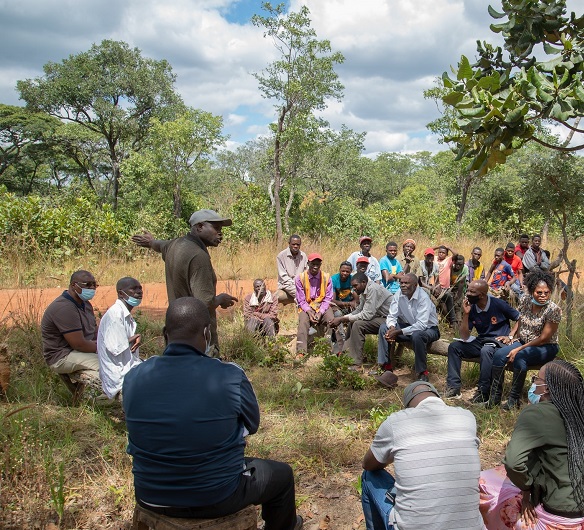
Using participatory methodologies we conduct the following researches that national, regional and international NGOs or private corporate clients require in order to make key decisions about the design of their community development work or business:
Capacity–building training
We offer all our capacity–building training within the Training for Transformation framework, which works wonders whenever the goal is to change mindsets so as to foster program sustainability, strengthen institutional structures, eliminate dependency or promote self–reliance, build effective movements, and undo entrenched stereotypes reminiscent of intolerance. The specific subjects of our training are listless, but the following are the broad themes that we are most commonly called upon to train on.
Development process facilitation and documentation
ACDRC expertly leads or facilitates and documents processes for organizational development including but not limited to the following: 〉 Strategic planning workshops 〉 Quarterly of annual program reviews, including processes leading to the writing of annual reports, newsletters, brochures, training manuals, etc 〉 Program formative (e.g., mid-term) and summative evaluations 〉 Best practices or case studies of interesting community development models 〉 Exchange learning sessions between organizations or community groups 〉 Audio–visual documentary production and dissemination.
Building capacities
We offer all our capacity–building training within the Training for Transformation framework, which works wonders whenever the goal is to change mindsets so as to foster program sustainability, strengthen institutional structures, eliminate dependency or promote self–reliance, build effective movements, and undo entrenched stereotypes reminiscent of intolerance. The specific subjects of our training are listless, but the following are the broad themes that we are most commonly called upon to train on.
Cross Cutting elements
Cross—cutting components, especially gender, disability, culture, environment and hu-man rights.
Public Health
HIV and AIDS management (we are excellent in involving people living with HIV in this work) . Sexual and reproductive health (focusing on adults and adolescents) . Maternal, Newborn and Child Health (MNCH).
Emergency preparedness and disaster risk reduction
Africa Community Development and Research Center (ACDRC) strengthens emergency preparedness and disaster risk reduction (DRR) by supporting communities, institutions, and local authorities to anticipate, withstand =, and recovers from shocks and stressses. The Center applies a community-based and risk-informed approach that prioritizes early action, local capacity building, and inclusive planning to reduce vulnerability and loss of life. ACDRC undertakes hazard and vulnerability assessments, early warning analysis, and contingency planning to inform evidence-based preparedness strategies. Disaster risk reduction interventions integrate climate adaptation, environmental management, and resilient livelihoods to address root causes of risk. Through parttnerships with government agencies, civil society, and humanitarian actors, ACDRC supports disaster preparedness training, simulation exercises, and the stablishment of community response mechanisms. By linking, preparedness, response, and recovery with research, learning and policy engagement, ACDRC contributes to strengthened resilience, reduced disaster impacts, and sustainable development gains in community and national levels.
Human migration management
Africa Community Development and Research Center (ACDRc) advances effective human migration management by generating evidence and implimenting programs that promote safe, orderly, and dignified migration while maximizing its development benefits. ACDRC adopts a rights-base, people-centered approach that recognizes migration as voth survival strategy and a driver of socio-economic transformation. ACDRC conducts migration researc, mobility assessments, and displacement analysis to understand drivers, patterns, and impacts of migration, including labor migration, forced displacement, and urbanization. This evidence informs inclusive program design that addresses displacement and urbanisation. This evidence informs inclusive program design that adresses protection risks, access to basic service, livelihoods, and social cohesion for migrants internally displaced persons, returnees, and host communities. Through collaboration with government institutons, regional bodies, and civil society, ACDRC supports migration governance, community- based integration initiatives, and durable solutions prgramming.